Æblekage
Danish Layered Apple Dessert- Yield
- Serves 4
- Active
- 35 minutes
- Total
- About 2 hours, including chilling
- Difficulty
- Medium
The story
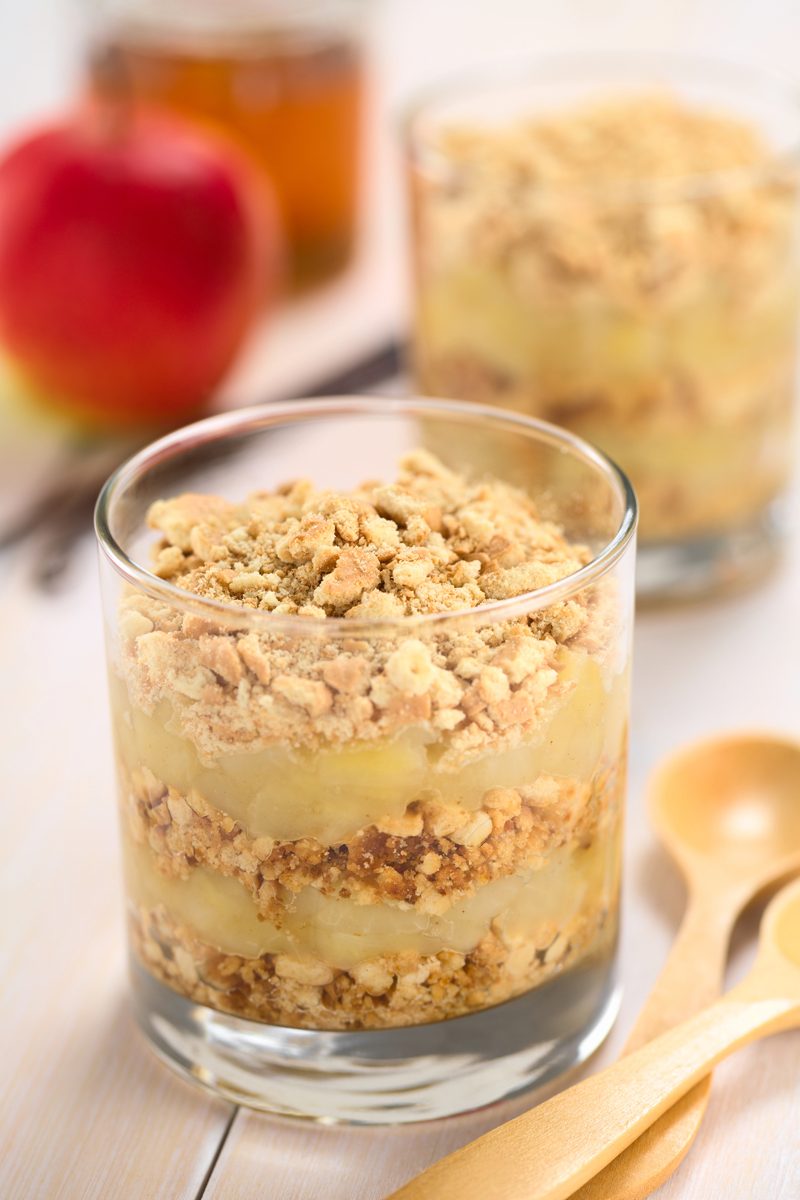
Æblekage translates as apple cake, but the Danish classic is not baked at all. It is a cold dessert of stewed apples, sugar-toasted breadcrumbs or crushed macaroons and whipped cream, layered in a bowl or in glasses and often finished with a dab of red currant jelly. Lex, the Danish national encyclopedia, traces how it took shape. The earliest recipes stewed apples in butter with eggs and flour. In 1740 a cookbook sprinkled apple puree with grated bread, cinnamon, cardamom and lemon peel, and then baked it. In 1830 the cookbook Kogebog paa Vers gave an apple cake recipe in rhyme, served warm with whipped cream, and by the middle of the century a variant called bondepige med slør, peasant girl with a veil, used grated rye bread under its cream and jam. Today Danes call the unbaked version gammeldags æblekage, old-fashioned apple cake, and make it the way their grandmothers did. It is best in autumn, when local apples are in season, though it is made all year. Build it in clear glasses so the layers show, and make the compote a day ahead so the only last-minute job is whipping the cream.
Ingredients and method
The full recipe, with US and metric measures and stand-ins for hard-to-find ingredients, is part of the Valentine's Day edition. Buy it once and keep the PDF.
Want to try first? Brændende kærlighed is free to cook.