Buñuelos de viento
Cream Puff Fritters- Yield
- About 35 small fritters (serves 8)
- Active
- 45 minutes
- Total
- About 1 1/4 hours, including resting
- Difficulty
- Medium
The story
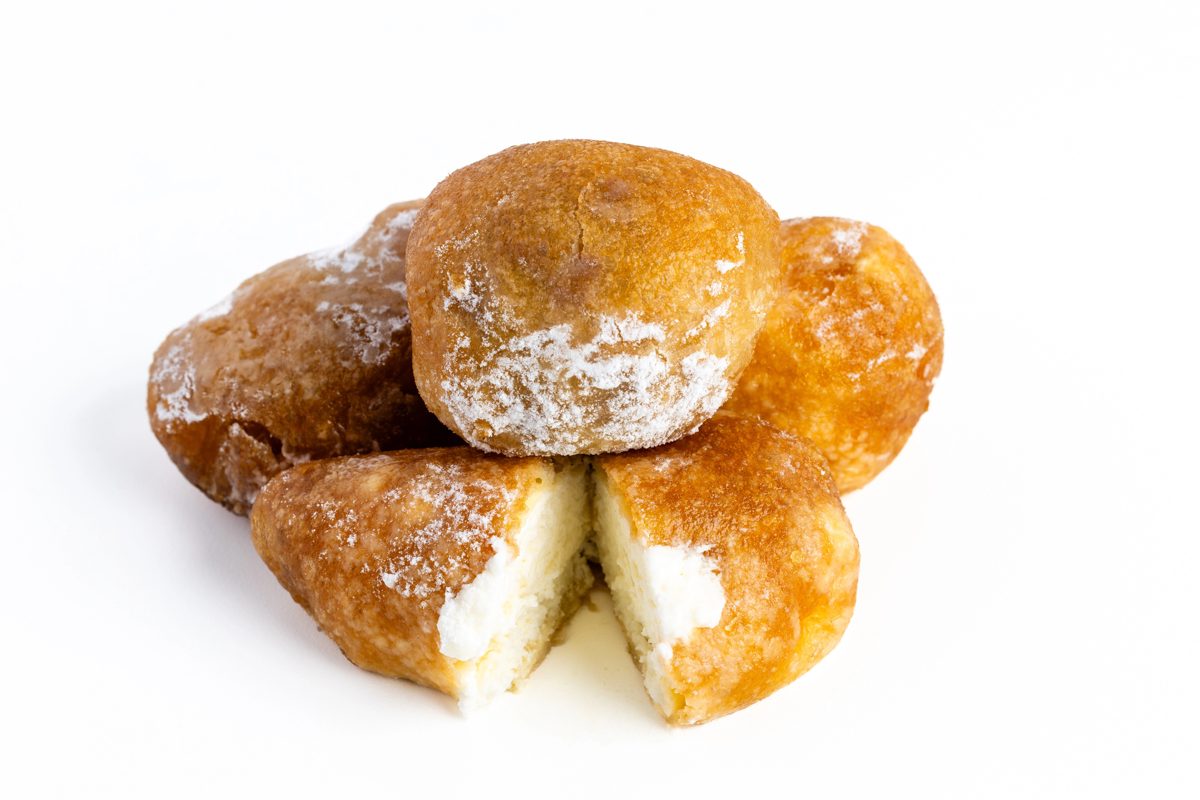
Buñuelos de viento, or wind fritters, are small balls of choux dough fried in oil until they puff up hollow, then rolled in sugar and often filled with cream. In Madrid they are above all an All Saints' Day sweet: around November 1 they crowd the shelves of the city's pastry shops, and fritters are eaten all over Spain on that day. They also have a place in Lent and Holy Week. Surveys of Spanish pastry list buñuelos de viento among the Holy Week sweets, together with torrijas, pestiños, leche frita and bartolillos, and the food magazine Gastronosfera ties them to Lent and Holy Week. Their origin is hazy. The Spanish word has been traced to puñuelo, a ball of dough, and in the 2nd century BC Cato the Elder described fried balls of cheese and flour called globi, coated with honey and poppy seeds. Gastronosfera notes the common belief that the Arabs of al-Andalus brought the fritter to the peninsula, fried in oil and bathed in boiling honey. The dough is made by cooking flour into boiling water and butter, then beating in eggs one at a time. Fry them shortly before serving, since they lose their crispness within a few hours, and pair them with hot chocolate or coffee.
Ingredients and method
The full recipe, with US and metric measures and stand-ins for hard-to-find ingredients, is part of the Easter edition. Buy it once and keep the PDF.
Want to try first? Torrijas is free to cook.