Farbana jaja
Onion-Skin Dyed Easter Eggs with Leaf Prints- Yield
- 12 dyed eggs
- Active
- 30 minutes
- Total
- 2 hours (including 1 hour soaking)
- Difficulty
- Easy
The story
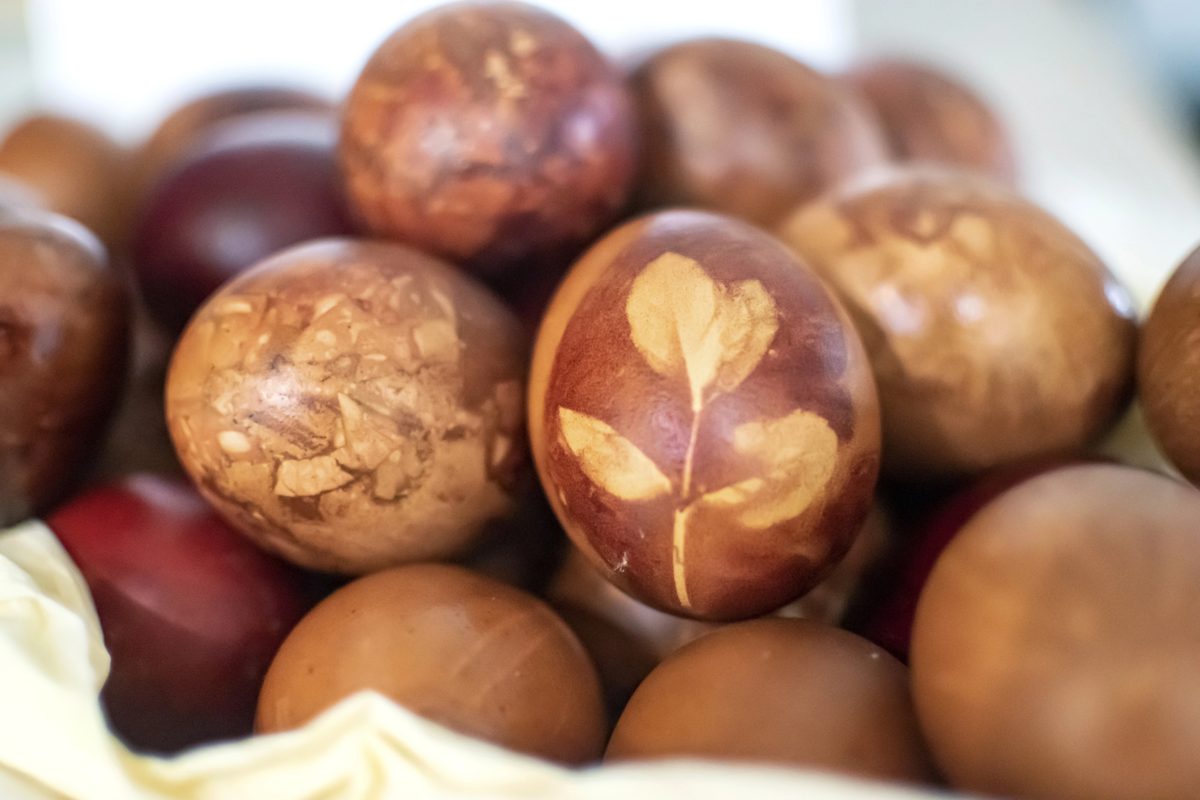
Serbian Easter eggs are dyed during Holy Week, most often on Good Friday, which falls on April 30, 2027 in the Orthodox calendar. Vera Petrović of Užice told Radio Free Europe's Serbian service that she dyes her eggs every Good Friday, most of them red in onion skins and patterned with leaves, because for her the red egg is the symbol of Easter. In Lešak, members of the Circle of Serbian Sisters press grasses onto the eggs and wrap them in stockings before dyeing, and a four-leaf clover is especially prized for the pattern, Kosovo Online reported in 2026. The first egg dyed is the čuvarkuća, the guardian of the house. It is colored red and kept all year, often beside the family icon, ethnologist Saša Srećković of the Ethnographic Museum told the magazine Lepa i srećna; the old one is never thrown away but buried in the garden, set on a river or left in a tree. A parish priest quoted by the same magazine accepts Thursday, Friday or Saturday of Holy Week; the magazine adds that Banat women dye on Good Friday, and many in parts of Šumadija on Holy Saturday. On Easter morning families crack the eggs against each other. Save onion skins for two or three weeks, and plan on one or two eggs per person.
Ingredients and method
The full recipe, with US and metric measures and stand-ins for hard-to-find ingredients, is part of the Easter edition. Buy it once and keep the PDF.
Want to try first? Frankfurter Grüne Soße is free to cook.