Pierogi ruskie
Potato and Cheese Pierogi- Yield
- About 50 pierogi (serves 4 to 6)
- Active
- 1 1/2 hours
- Total
- 2 hours
- Difficulty
- Medium
The story
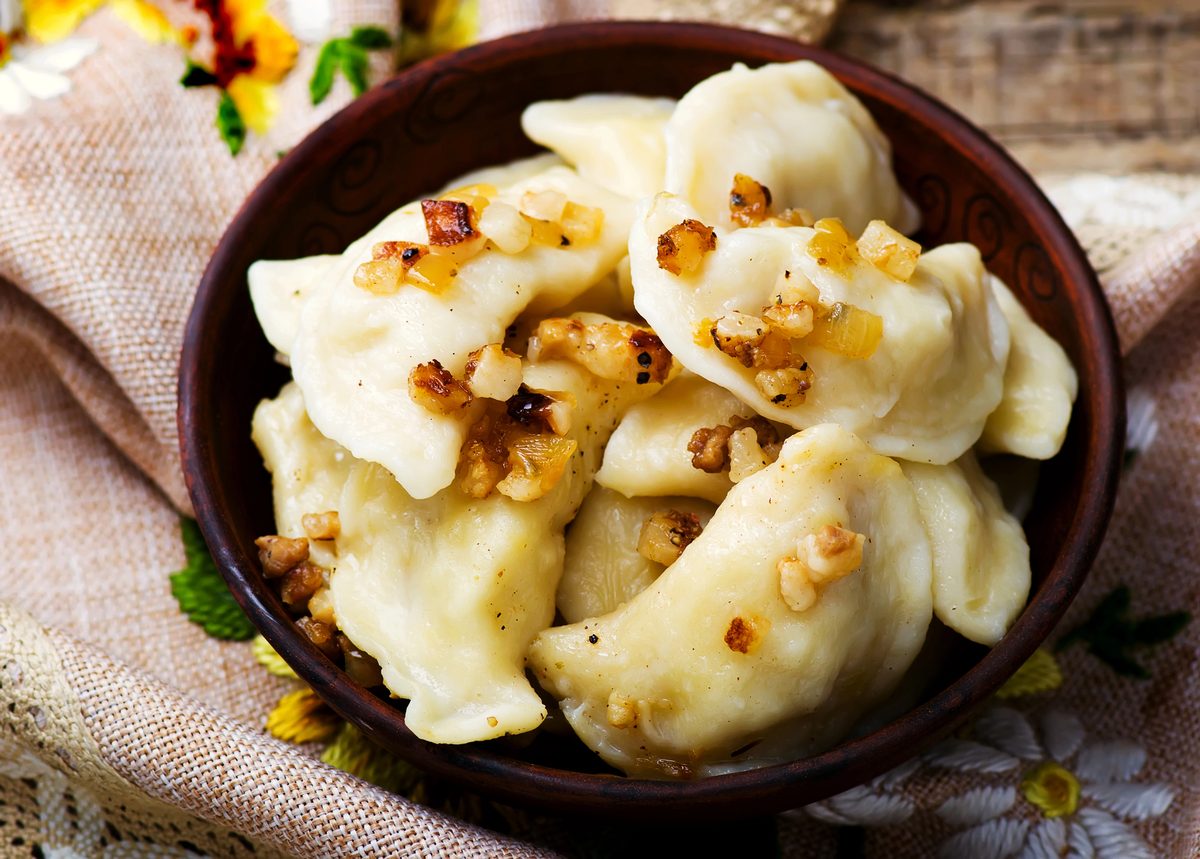
Pierogi ruskie are filled with twaróg, the fresh Polish farmer's cheese, mixed with mashed potatoes and fried onion. The name means Ruthenian pierogi, not Russian pierogi, a mistranslation foreigners often make. They are a staple of Polish home cooking, and their Ukrainian relatives, varenyky, are a national dish there. Pierogi themselves are old: a recipe appears in Poland's first cookbook, Compendium ferculorum, published in 1682. Saint Hyacinth is treated as their patron, and the phrase "Święty Jacek z pierogami", Saint Hyacinth and his pierogi, survives as an old Polish exclamation of surprise. Kraków holds a pierogi festival; in 2007 visitors ate about 30,000 a day. In the United States, where pierogi became a symbol of Polish-American identity, the first documented sale was at the Marton House Tavern in Cleveland in 1928, and frozen pierogi were common in American supermarkets by the 1960s. Made from potatoes, cheese, flour and onions, they suit a winter pantry, and the boiled dumplings are usually served with fried onions, sour cream or both, and in Polish homes sometimes with bacon fat and bacon bits. A batch of 50 feeds four to six, and extras freeze well.
Ingredients and method
The full recipe, with US and metric measures and stand-ins for hard-to-find ingredients, is part of the Winter Folk Dishes edition. Buy it once and keep the PDF.
Want to try first? Żurek is free to cook.