Rugbrød
Danish Rye Bread- Yield
- One 9-by-5-inch loaf (about 2 1/4 lb, 20 to 24 thin slices)
- Active
- 30 minutes
- Total
- About 1 1/2 days (12 to 16 hours starter and soaker, 2 to 4 hours rising, 75 minutes baking, overnight cooling)
- Difficulty
- Medium
The story
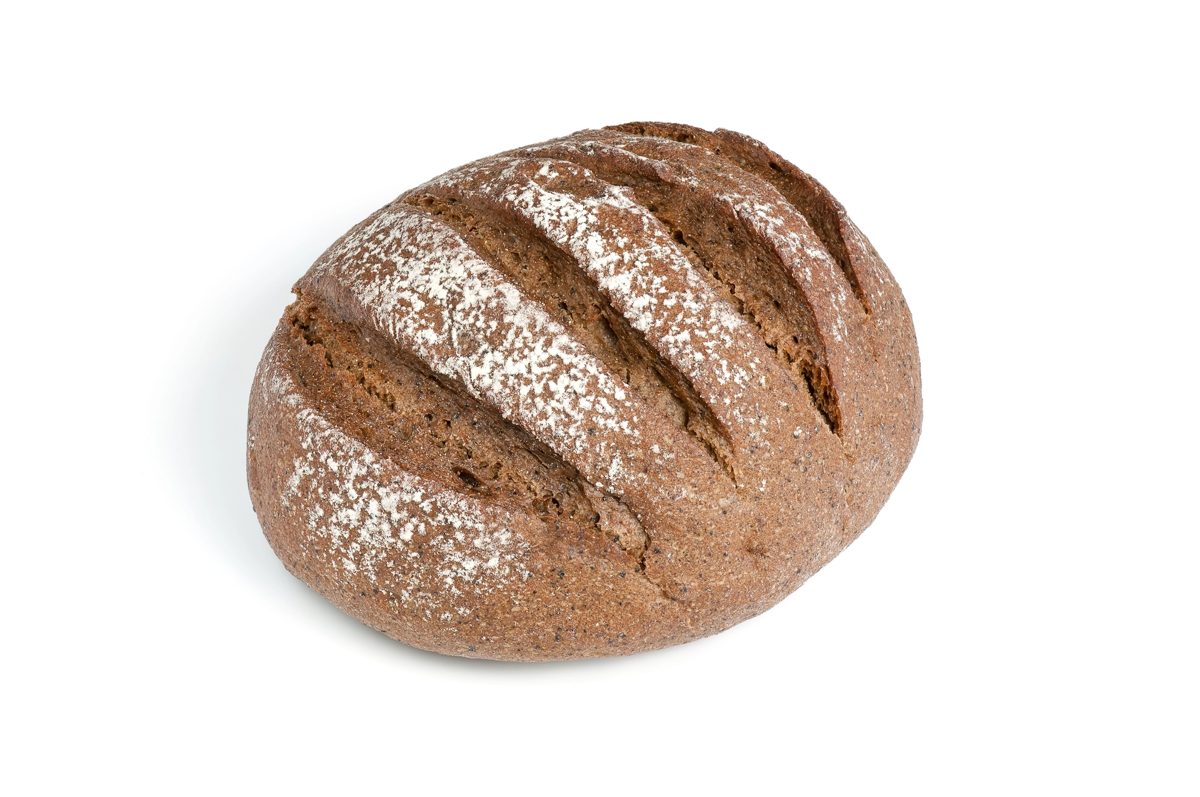
Rugbrød is the dense, dark sourdough rye loaf that also sits on the Danish Easter lunch table. Lex, the Danish national encyclopedia, calls it the Danes' national food and that it was the everyday bread in Denmark for more than 1,000 years, from the Viking Age until the 1950s. In older Danish, brød alone meant rye bread, while kage meant bread of wheat or sifted rye, eaten mainly on holidays. Denmark lies in Europe's rye belt, and the damp Nordic climate is one reason the bread is soured: the acids of the sourdough check enzymes that would otherwise make rye dough sticky after a wet harvest. Farms once baked their own loaves, about once a month in winter, from a very stiff dough that kept for weeks. After millers' and bakers' privileges ended around 1860, Dutch-style windmills went up, and after that every market town had at least one bread factory. Modern loaves are mixed only until even, not kneaded like wheat dough, studded with cracked rye and seeds, and baked for over an hour until the center reaches about 208°F. Bake it two days before Easter, since the loaf needs a full night to cool before it slices cleanly.
Ingredients and method
The full recipe, with US and metric measures and stand-ins for hard-to-find ingredients, is part of the Easter edition. Buy it once and keep the PDF.
Want to try first? Frankfurter Grüne Soße is free to cook.